

Table of Contents
Introduction
Okay, I may have gone overboard with the subtitle. However, I couldn’t think of a better way to introduce my thesis in such a concise way. I never studied the hero’s journey, so I can’t make the argument one way or another if it actually defined the genre as many claim. What I will say about Nolan’s Odyssey is that it presents the story much less as a great man story.
Instead, it focuses more on Odysseus as a thoughtful and reflective man who realizes that his actions led to the very consequences undo the Greek empire. When I made this comment to my wife during the movie, she said, “It always was an anti war story.” “Yeah,” I replied, “but people always want to interpret it as this great man or great warrior coming home to be celebrated as a hero.” I know people have poor media literacy, but I never realized how far it reached.
“Controversy” About Casting
Speaking of poor media literacy, the main online discourse I saw around Nolan’s Odyssey was the casting choices for some of the characters. Just the other day, I saw that Uber Nazi, Leon Musk, tweeted about Grok creating an AI version of the Odyssey that is more historically accurate. All I will say about any of this is I will never understand how Leon was able to con so many people into believing that he is the smartest man in any room.
Nolan’s Odyssey: A Beginning You’d Expect
The movie starts in a way you’d expect. It sets up the myth of Odysseus as a smart general and conquering hero. Those back home hear of his exploits by way of the bard’s songs. The palace rocks with meals that celebrate the victory over the Trojans. You get an homage to the final shot in Planet of the Apes that introduces the horse. This serves as a not so subtle warning of what’s to come.
Even in this beginning, Nolan shows us that threads are unraveling. The feasts in the palace cover inhuman behavior towards each other and animals. The suitors that come to impress Penelope fail on a colossal scale. Granted, none of them can hope to fill Odysseus’s shoes. However, they can’t even show the most basic humanity. All but one. Antinous, at least, fakes it well enough to gain audience with the queen. However, his servant to the queen quickly gives him up as a traitor and unworthy.
The Disconnect Between The “True” Myth and the Perception
Nolan’s Odyssey, as much of pop culture these days, serves as a mirror to society. I already mentioned the folks who are upset about some of the casting decisions. I actually will respond now to that criticism. The only time it took me out of the fantasy of the movie is when Tom Holland appeared on screen. It might just be Spider-Man bias, but he didn’t belong in this movie at all.
But, beyond that very silly critique, I already mentioned that media literacy is not a strength for many. I listened to the podcast, “This Guy Sucked”, about Vedius Pollio. They discussed that much of Roman history, and by extension, Greek history gets white washed by people who fundamentally misunderstand that history. In America, it goes all the way back to the founders who revered Roman rulers and emulated their society by building on the backs of slaves.
That leads, eventually, to the modern American Conservative movement. I won’t go into the history of that right now. I also will not dignify the MAGA movement with any type of response even though they believe many of these same things. Republicans venerate the founding fathers and pervert their words to suit their agenda. Then again, perhaps there’s not that much perverting if we’re being honest. It’s literally just the worst parts of humanity held up as the standard. As I said to my wife while listening, “Everything sucks because everything has always sucked.”
Nolan’s Odyssey: Go Woke, Go Broke?
First of all, let me answer that question. As usual, right wing boycotts prove toothless. The movie is an absolute success at the box office in spite of all of their whinging. With that being said, there’s no way that anyone can come away from this movie with the impression that it serves as a cautionary tale against war and vengeance. Violence only leads to more violence.
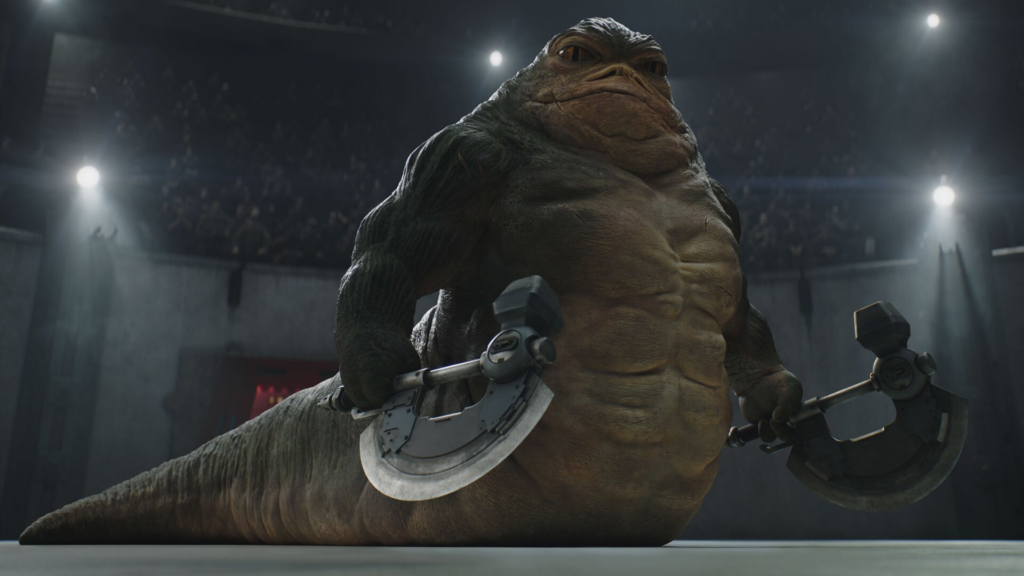
Instead of being an all consuming monster, the cyclops comes off as someone whose home was invaded and defends against that invasion. In the escape, instead of simply escaping, Odysseus turns around and shoots the thing in the eye. This is not a noble act. In modern parlance, this is a war crime. The sirens, always portrayed as tempting to mortal men, serve also as a warning in this version. Odysseus talks about how their voice is first everything that you want. Then, it becomes everything you fear. Their voices are an itch under the skin that you cannot properly scratch and they sing about everything you lament.
The iron warriors meet them and soundly defeat them as they retreat. I turned to my wife during this scene and said, “For a great army, they spend a lot of time running away.” The witch reveals them as pigs, showing off their true nature as rapists and pillagers. When Odysseus visits Hades, both Sinon and Agammemnon warn Odysseus of his possible fates. Then, to drive the point home, Tiresias gives him the entire prophecy of him and his men.
Like Agammenon, Odysseus is not welcomed as a hero. Some of that is his own doing. He slinks back in disguised as a beggar. Then, in one final act of violence, he slaughters the suitors. This leads to his self-imposed exile and abdication of the throne.
Nolan’s Odyssey: A Hero’s Journey?
I started this post by saying that the movie is not a hero’s journey. I wanted to explore the themes in the movie and draw the conclusion that Odysseus is, in fact, a hero. However, the interpretation that he is a hero because of his war exploits is a deeply flawed one. Even his journey home, at the expense of his entire army, can be considered a selfish act. However, he returns home to his family. He gives up the throne to his son and fulfills his wife’s wish to travel west. This also gives him a chance to pay respects to his dead men. So, yes, he’s a hero. But, he’s a Greek hero, so that comes with flaws.